01 Introduction
The production of bricks, tiles, and related products using a roasting kiln is a high-energy-consumption method of building material production. It not only consumes a large amount of energy resources but also results in the emission of greenhouse gases and other pollutant gases. Therefore, the sintered brick and tile industry is a key target for energy-saving and emission-reduction technological transformation in China's building material industry, and enterprises' demand for advanced and applicable energy-saving and emission-reduction technologies is becoming increasingly urgent. This article introduces various energy-saving and emission-reduction technical methods that are currently suitable for sintered brick and tile production enterprises in China, providing references for technology selection for new production lines or technological transformation of existing production lines.
02 Energy-saving and emission-reduction technologies in production process
2.1 Energy-saving and heat-preserving baking technology for large tunnel kilns
2.1.1 Technical introduction
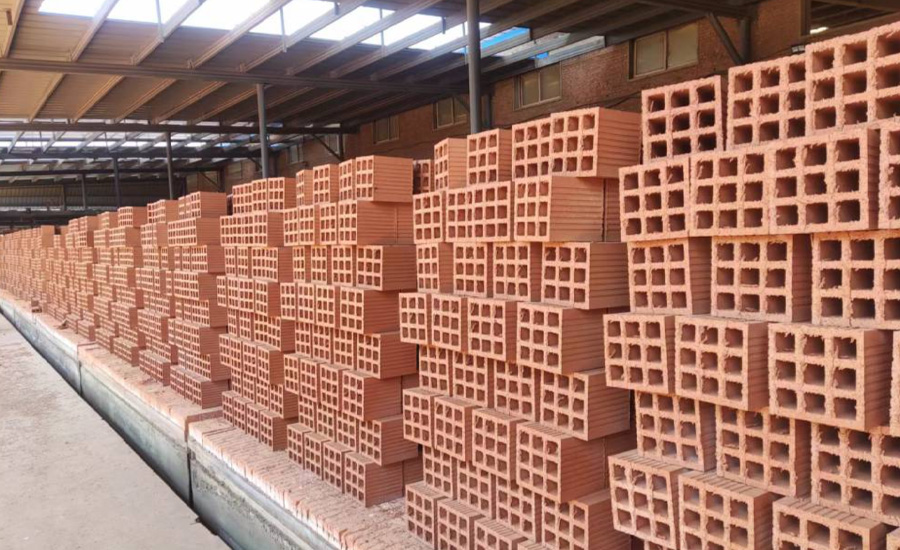
The large energy-saving and heat-insulating tunnel kiln has an internal width of not less than 4.60m and can reach over 10m. The kiln roof structure, from top to bottom, consists of lightweight refractory materials, aluminum silicate insulation materials, high-temperature sealing coatings, and main and secondary beams supporting the ceiling materials. This structure ensures the heat resistance, insulation, and sealing performance of the kiln roof. The kiln wall structure, from inside to outside, consists of refractory materials, lightweight insulation materials, thermal insulation materials, and structural materials. Lightweight lining materials are used to reduce the heat storage capacity of the kiln cars: a double sealing structure is adopted between kiln cars, and sealing structures are also adopted on both sides of the kiln body, eliminating gas flow between the kiln car surface and below. According to the requirements of the rapid baking system, the tunnel kiln is equipped with a cooling system inside the kiln, a balance and cooling system under the kiln, a waste heat utilization system, a kiln temperature and pressure monitoring and control system. Fuel can be selected from coal, fuel oil, or natural gas according to different products. The waste heat is fully recovered, greatly improving the energy-saving efficiency and heat utilization rate of the thermal process. The large energy-saving and heat-insulating tunnel kiln has a small temperature difference in cross-section, good self-insulation effect, high thermal efficiency, high production, good product quality, high pass rate, high compressive strength of products, low labor intensity for employees, and good environmental performance.
2.1.2 Technical application conditions
New production line or technical transformation of existing tunnel kiln
Energy-saving and emission-reduction effect: The energy-saving efficiency of the thermal process can reach 40%, and the heat utilization rate can reach 60% to 70%. Compared to the general energy consumption in the industry, it can save more than 20% of energy, and the reduction in energy consumption can bring corresponding emission-reduction effects.
2.1.3 Investment operating costs (data for individual regions, for reference only)
A tunnel kiln production line with an annual output of 60 million standard bricks requires an investment of approximately 20 million yuan, and the annual operating costs, excluding raw material and fuel expenses, are roughly between 1 million and 2 million yuan.
2.2 Sintered insulation block technology
2.2.1 Technical introduction
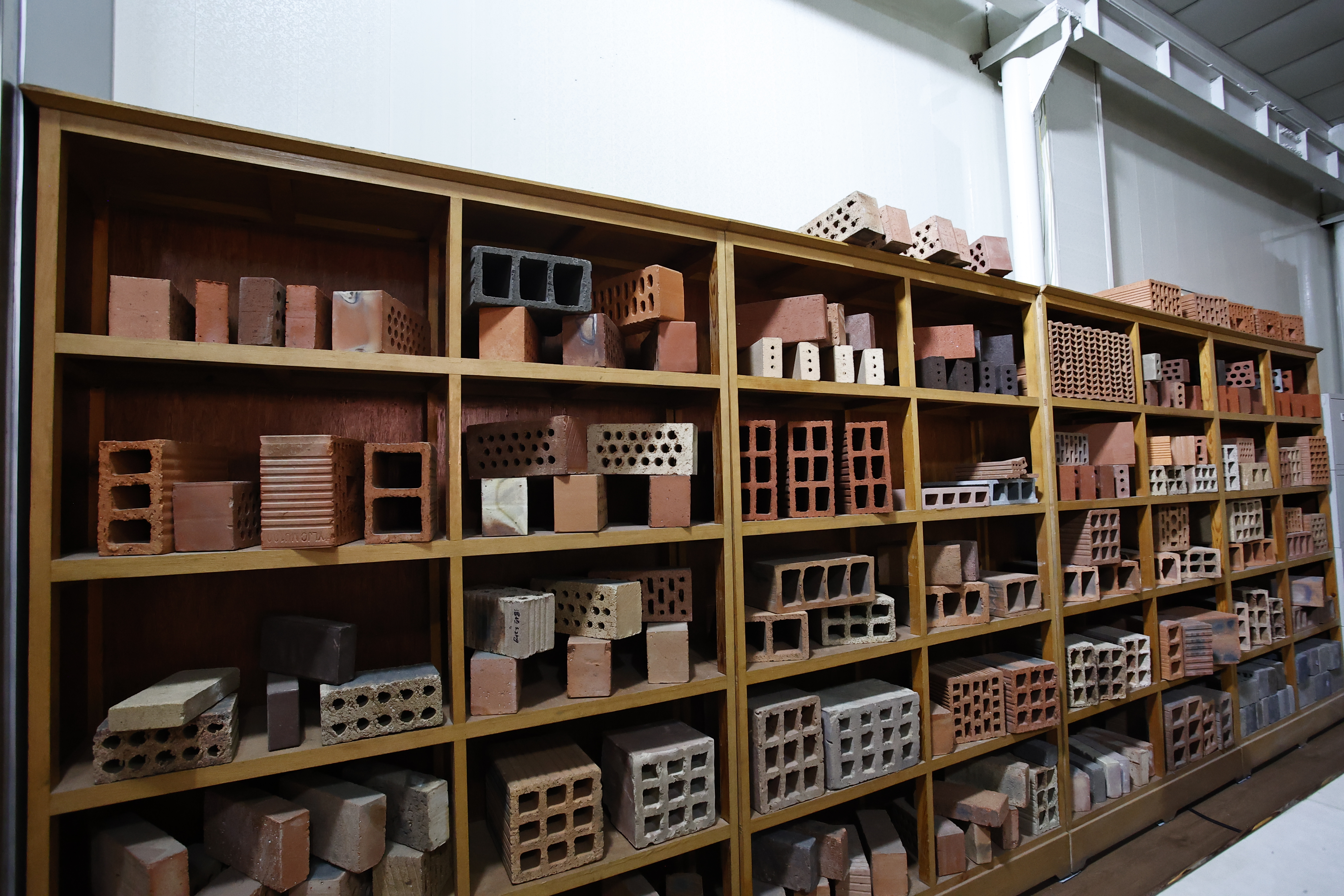
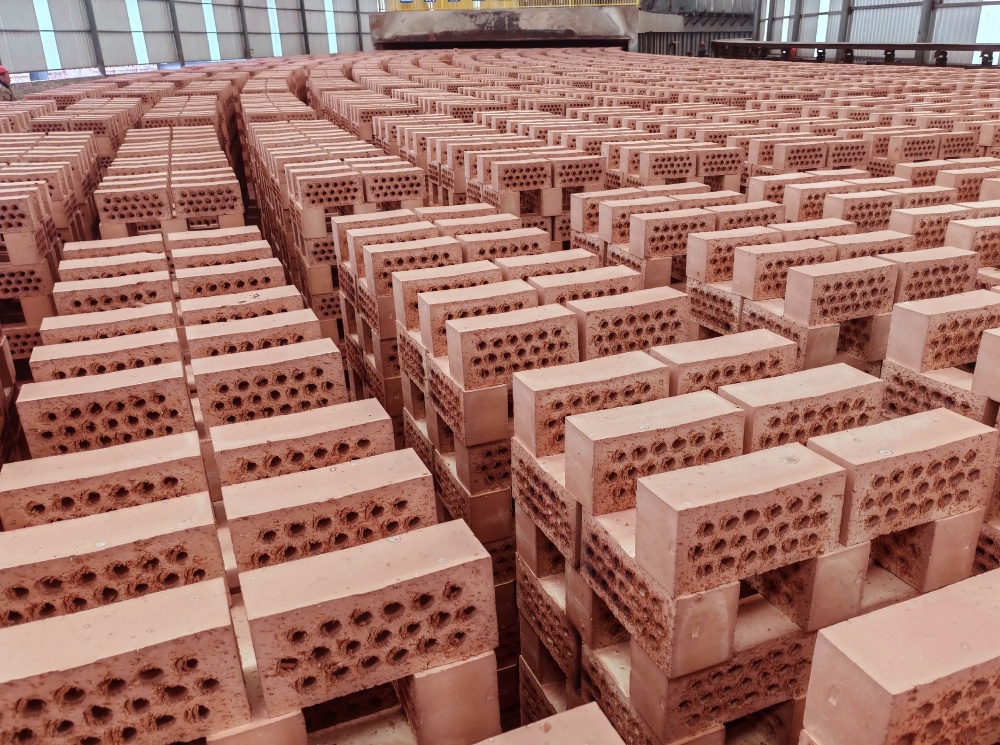
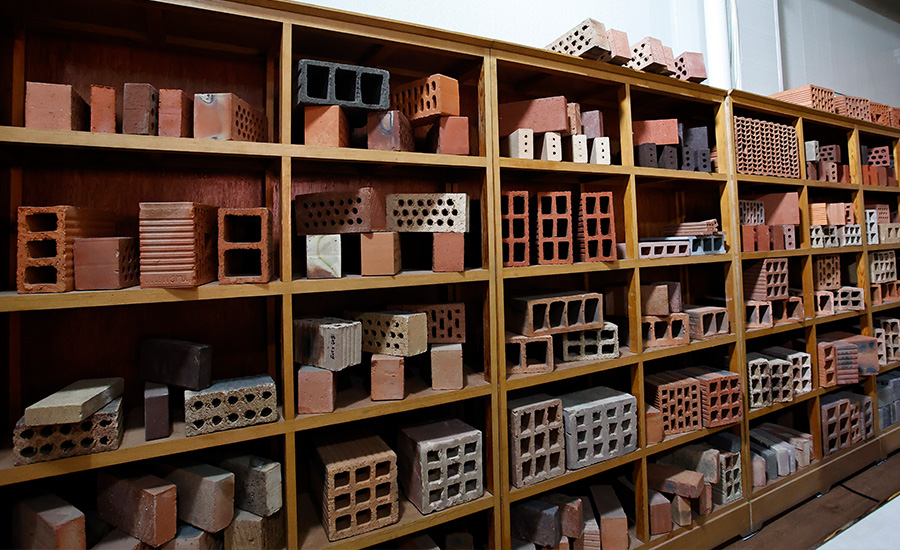
Sintered insulation blocks are primarily used for thermal insulation and porous thin-walled blocks in building envelope structures. These blocks feature reasonable hole design and hole arrangement, with a high porosity rate of over 50% and high strength, saving raw materials and fuel compared to ordinary porous hollow sintered products. They meet the needs of energy-saving building wall masonry, offering excellent thermal insulation, heat insulation, and sound insulation effects, reducing the thermal conductivity of the wall and achieving the goal of building energy efficiency. To enhance the insulation effect, reduce the thermal conductivity of the block, and increase the thermal resistance value, the interior cavity of the block can be filled with high-performance thermal insulation materials such as mineral wool and polystyrene particles. The main thermal resistance of the block consists of the thermal resistance of the insulation material and the thermal resistance of the enclosed air layer. Foreign countries have mature technologies in this type of composite insulation block, while domestic development is still in its initial stage of promotion. Currently, sintered perforated insulation blocks with interior cavity filled with polystyrene particles have been designed and manufactured. The interior cavity of the block is filled with heated and sealed polystyrene particles, and the filling production process is simple. The interior cavity filling material, polystyrene particles, can be completed by a dedicated filling equipment. This sintered perforated insulation block possesses high thermal insulation and sound insulation performance, as well as durability.
2.2.2 Technical application conditions
New sintered product production line or modification of existing production line
2.2.3 Energy conservation and emission reduction effect
Sintered insulation blocks, due to their excellent insulation performance, can effectively achieve building energy efficiency. A single wall material with a thickness of 390mm can meet the energy-saving requirement of 65%, thereby achieving the goal of energy conservation and emission reduction. Sintered insulation blocks have a high porosity rate, which can save 15% to 30% of raw materials and 10% to 20% of energy during production compared to ordinary porous hollow sintered products.
2.2.4 Investment operating costs
A production line with an annual output of 100 million standard bricks requires a one-time investment of approximately 40 to 50 million yuan, and the total annual operating cost is about 10 million yuan.
2.3 Sintering coal gangue technology
2.3.1 Technical introduction
Sintered coal gangue brick is a construction brick made primarily from coal gangue (accounting for over 70% of the raw materials, with a maximum of 100%), which can be mixed with a small amount of clay, shale, and fly ash. It is produced through crushing, molding, and baking. Sintering coal gangue can save a significant amount of clay. Since coal gangue contains coal, it can be burned to release heat, which greatly reduces the amount of coal used for baking. In some cases, no additional fuel is required, and the excess heat can be recycled.
2.3.2 Technical applicable conditions
There are technological renovations or new production lines for sintered brick production using clay or shale from areas with coal gangue sources in the surrounding areas.
2.3.3 Energy conservation and emission reduction effect
Each 10,000 standard bricks can consume approximately 20 tons of coal gangue. The annual production of 100 million standard bricks from coal gangue sintered bricks can save approximately 10,000 tons of coal compared to the production of 100 million standard blocks of solid clay bricks. If waste heat is also recovered during the production process, it can provide heating for approximately 20,000 square meters of buildings in winter, saving approximately 3,000 tons of coal for heating. Based on the production of 100 million standard bricks from coal gangue sintered bricks, approximately 330,000 square meters of land can be saved annually, and the land occupied by coal gangue stockpiles can be reduced by 1 to 1.7 square meters per year.
2.3.4 Investment operating costs
Applying this technology requires modifications to the original production line, including the addition or improvement of raw material crushing equipment, with an investment of approximately 200,000 to 500,000 yuan. The reasonable raw material ratio and coal input amount need to be calculated based on the calorific value of coal gangue. Coal gangue is mixed into clay or shale according to the ratio, and the amount of additional coal is reduced during the roasting process. Therefore, the operating cost is mainly the expenditure on purchasing coal gangue, which can significantly reduce the consumption of clay and coal. The price of coal gangue varies according to different calorific values and regional differences, but it is generally below 50 yuan/ton, and in some regions, it is even within 20 yuan/ton.
2.4 Sintered fly ash technology
2.4.1 Technical introduction
Utilizing fly ash from power plants to make bricks can not only save energy and protect land resources but also benefit the environment. Adding fly ash to the raw materials for sintered brick preparation serves two main purposes: firstly, as an internal fuel, utilizing the residual carbon in fly ash to reduce coal consumption; secondly, as an external admixture for plasticizing raw materials, reducing drying shrinkage and lowering the drying sensitivity coefficient. Fly ash sintered bricks cannot be produced using a single raw material. The amount of fly ash used should be over 50%, and other raw materials need to be added as binders, such as clay (with a plasticity index greater than 9%) or shale, or a suitable amount of bentonite or inorganic chemical composite admixtures. With technological development and updates, the amount of fly ash added continues to increase.
2.4.2 Technical application conditions
It is suitable for regions with nearby sources of fly ash (such as power plants) and adequate clay or shale resources, for the modification of existing clay or shale brick production lines or the establishment of new ones.
2.4.3 Energy conservation and emission reduction effect
Saving 40% to 60% of soil (compared to solid clay bricks): The amount of coal saved depends on the calorific value of fly ash, generally up to 20%. When the ash content is above 50%, for a factory with an annual output of 60 million bricks, the annual ash consumption can reach 70,000 to 80,000 tons. The drying time of brick billets is shortened, which can save land for drying billets.
2.4.4 Investment operating costs
The use of high-volume fly ash brick technology requires appropriate technical modifications to the raw material preparation and molding equipment of the original production line, with an investment cost of approximately 300,000 to 500,000 yuan. The operating cost mainly increases the expenditure on purchasing fly ash, while saving costs on clay and fuel. The price of fly ash varies according to its grade, carbon content, and transportation distance, ranging from a few dozen yuan to over a hundred yuan per ton.
2.5 Sintered sludge brick making technology
2.5.1 Technical introduction
After being dried in the sun for more than three months, river and lake silt can be directly used as raw material for brick making. It can be fired in tunnel kilns to produce various specifications of hollow bricks and perforated bricks. Additionally, it can be mixed with different raw materials such as coal gangue, fly ash, or slag to further conserve resources and energy. The advantages of using river and lake silt as raw material for sintered brick production are primarily the conservation of clay resources, followed by dredging the river channels, solving the problem of silt accumulation in the river channels, improving the river's flow capacity, and improving the environment. It can also enhance water quality, and bricks made from silt have good energy-saving effects. The annual collection of silt from lakes and rivers in China alone can reach at least 70 million tons, making the promotion of silt brick production a viable option.
2.5.2 Technical applicable conditions
New or renovated sintered brick production lines in areas with silt sources from rivers and lakes.
2.5.3 Energy-saving and emission-reduction effect
Saving clay resources, every production of 10,000 standard bricks can save 10~15 cubic meters of clay. By incorporating internal fuels such as coal gangue, fly ash, and slag into the sintering of bricks, energy consumption can be reduced accordingly, achieving a fuel saving of over 50%.
2.5.4 Investment operating costs
The production technology and equipment for sintered sludge brick making are not significantly different from those for sintered ordinary bricks, and the production line for sintered ordinary bricks can be easily modified for this purpose, with an additional investment of less than 500,000 yuan. However, due to the need for a longer period of drying and air-curing of the sludge, the cost of making bricks is slightly higher than that of sintered ordinary bricks, which increases the cost of raw materials. The price of sludge raw materials varies from region to region, ranging from approximately 5 to 20 yuan per cubic meter. Due to the special role of sludge brick making in environmental protection, some local governments provide financial subsidies or preferential policies to enterprises applying this technology.
03 Energy recycling and utilization technology
3.1 Manual drying technology using waste heat from tunnel kilns
3.1.1 Technical introduction
During the production process of bricks and tiles, the heat carried away by exhaust gas and emitted to the surrounding medium accounts for more than one-third of the total heat. The tunnel kiln waste heat artificial drying technology utilizes the waste heat from the cooling zone of the tunnel kiln to heat the air, which is then transported through pipes to the drying chamber to dry the wet brick bodies inside. This process forcibly removes the moisture from the bodies. Using waste heat to dry brick bodies during the tunnel kiln production process not only saves a significant amount of coal used for drying brick bodies, but also reduces the large amount of land occupied by natural drying fields, saving costs such as land occupation fees, rainproof equipment fees, and labor costs. It ensures product yield and quality, shortens the drying cycle, and lowers the kiln exit temperature, improving workers' labor conditions. In recent years, newly built tunnel kiln production lines have included artificial drying technology, which has improved the heat utilization rate of the tunnel kiln. Therefore, while promoting tunnel kilns, artificial drying technology can also be promoted.
3.1.2 Technical applicable conditions
Construction of new tunnel kilns or renovation of early tunnel kilns.
3.1.3 Energy conservation and emission reduction effect
A brick-making enterprise with an annual output of 60 million standard bricks can save approximately 60 acres of land by switching from natural drying to artificial drying.
3.1.4 Investment operating costs
A tunnel kiln artificial drying chamber with an annual production capacity of 60 million standard bricks requires an investment of about 1 million yuan. It can reduce land compensation fees and other expenses by more than 300,000 yuan per year, and the annual operating cost is within 100,000 yuan.
3.2 Waste heat utilization technology for tunnel kilns
3.2.1 Technical introduction
The raw materials of the internal combustion brick tunnel kiln generate heat that not only meets the needs of baking and artificial drying but also has some excess heat to spare. The waste heat heating and supply technology of the tunnel kiln recovers and utilizes this excess heat. Through waste heat boilers and other waste heat utilization equipment, cold water is heated to provide heating for production workshops, offices, and living areas during winter, as well as for bathing and other purposes. This technology enables complete utilization of production waste heat for winter heating without the need for coal for heating. The production process does not increase fuel consumption or production equipment; it simply involves selecting internal fuels with higher calorific values for use in winter. Currently, newly built tunnel kilns are generally equipped with waste heat utilization equipment.
3.2.2 Technical applicable conditions
For tunnel kilns that utilize internal combustion fuels, waste heat heating is more suitable for use in the winter in northern regions.
3.2.3 Energy saving and emission reduction effect
An internal combustion brick tunnel kiln with an annual production capacity of 120 million standard bricks can meet the heating needs of approximately 20,000 square meters in winter, saving about 3,000 tons of coal for heating each year and reducing corresponding carbon dioxide emissions by about 6,000 tons.
3.2.4 Investment operating costs
The investment cost for each waste heat boiler is approximately 100,000 yuan, with an annual operating cost of about 10,000 to 20,000 yuan. The expected lifespan is 15 years, yielding a net benefit of approximately 200,000 yuan per year. The investment for the heat pipe waste heat recovery and utilization project of a production line that produces 110 million coal gangue bricks annually is 357,000 yuan, resulting in annual savings of 270,000 yuan.
3.3 Waste heat power generation technology for large tunnel kilns
3.3.1 Technical introduction
Waste heat power generation technology is a technique that converts excess waste heat energy from production processes into electrical energy. During the calcination process of coal gangue brick making, a significant amount of heat is generated, which is expelled from the kiln through the exhaust fan, primarily consisting of flue gas waste heat and product cooling waste heat. According to surveys, the total amount of waste heat in sintered brick production accounts for approximately 30% to 60% of its total fuel consumption, and the recoverable waste heat resources constitute about 40% of the total waste heat resources. Currently, this heat is basically not effectively utilized, except for being mixed with some cold air to cool down to around 125℃ for drying brick billets. The flue gas temperature in the high-temperature section of the tunnel kiln reaches 400℃, and the average temperature of hot air can reach around 200℃, making it a good stable low-temperature heat source with the potential for waste heat power generation. Large tunnel kiln waste heat power generation technology utilizes the cooling heat of products from large tunnel kilns and medium-to-low temperature flue gas and waste heat at 200~500℃ as heat sources. Through a waste heat boiler (heat exchanger), the heat in media such as flue gas is recovered, and energy is transferred to heat feedwater to produce superheated/saturated steam, which drives the turbine generator unit to generate electricity. Furthermore, waste heat power generation does not affect normal production. According to industrial tests, waste heat power generation can typically reach 500~1500kW, which can basically meet the electricity consumption of coal gangue brick factories. Currently, this technology has been put into practical use domestically and is still being continuously improved.
3.3.2 Technical applicable conditions
Suitable for large tunnel kilns with sintered coal gangue bricks that operate at high temperatures in the cooling zone (with an annual output of over 60 million standard bricks).
3.3.3 Energy conservation and emission reduction effect
A production line with an annual output of 120 million coal gangue sintered bricks utilizes tunnel kiln waste heat for power generation. After deducting plant power consumption, it can supply approximately 666 kWh of electricity annually, with a total power generation equivalent to saving approximately 3,700 tons of standard coal per year, which translates to a reduction of approximately 9,200 tons of carbon dioxide emissions.
3.3.4 Investment operating costs
Two large-section tunnel kilns with a primary firing width of 6.9m (totaling 120 million pieces per year) are equipped with two 3t/h secondary medium-temperature and medium-pressure waste heat boilers, accompanied by a 1.5MW steam turbine generator unit. The total investment is approximately 10 million yuan, with an annual operating cost of about 1.8 million yuan and an internal rate of return of about 30%. This setup can save the enterprise approximately 4.3 million yuan in expenses annually, and after deducting the operating costs, it can increase the enterprise's profits by about 2.5 million yuan per year. According to relevant national policies, the income from waste heat power generation is exempt from corporate income tax for the first three years.
04 Pollution end-of-pipe control technology
4.1 Wet brick and tile flue gas desulfurization technology
4.1.1 Technical introduction
During the desulfurization process, dust is also removed simultaneously, achieving multi-purpose use of one machine for both dust removal and desulfurization, or integration of dust removal and desulfurization. Adding a pre-washing tower before the absorption tower allows the high-temperature flue gas to be cooled, typically from temperatures above 120°C to around 80°C, and humidifies the flue gas, which is beneficial for improving the absorption efficiency of SO. At the same time, it also serves as a dust removal function, with a dust removal efficiency typically around 95%.
4.1.2 Technical Applicability: Applicable to sintered brick and tile production lines using sulfur-containing fuels or raw materials. The main control method for SO emissions in sintered brick production is post-combustion desulfurization, also known as flue gas desulfurization. Currently, wet flue gas desulfurization is considered the most mature and effective method for controlling SO2 emissions, with an average desulfurization rate of 90%. The limestone/gypsum wet process is currently the most technologically mature and widely used desulfurization technology. This method uses a slurry of limestone or lime as the desulfurizing agent, which is sprayed and washed onto the SO-containing flue gas in an absorption tower. This causes the SO in the flue gas to react with the CaSO in the slurry, oxidizing both CaSO to CaSO4 (gypsum), a by-product of desulfurization. This process produces 2.7 tons of gypsum per ton of SO absorbed. The flue gas desulfurization process using the limestone/gypsum method includes a flue gas system, an absorption tower desulfurization system, a desulfurizing agent slurry preparation system, a gypsum dewatering system, and a wastewater treatment system. The system is comprehensive and relatively complex, requiring a relatively high one-time investment. Among them, the absorption tower desulfurization system and the desulfurizing agent slurry preparation system are essential for desulfurization, while the flue gas heat exchange system, gypsum dewatering system, and wastewater treatment system can be simplified or eliminated according to specific circumstances. The flue gas emitted from brick and tile production kilns generally contains a certain amount of dust. Before absorbing SO, flue gas can undergo pretreatment, such as by installing high-efficiency dust collectors, such as electrostatic precipitators and wet dust collectors, to remove dust or further purify SO.
4.1.3 Energy-saving and emission-reduction effect
The desulfurization and dust removal rates can both reach over 90%. The concentration of SO2 in the purified flue gas is below 700mg/m3, and the concentration of particulate matter is below 100mg/m3, fully meeting the national emission standards.
4.1.4 Investment operating costs
The investment cost for a set of brick-tile wet flue gas desulfurization equipment is approximately 2 million yuan, and the annual operating cost ranges from 500,000 to 1 million yuan, depending on the sulfur content of the flue gas.